Records and celebrates the presence and achievements of queer sexuality throughout human culture and history, and even in the animal knigdom
Tuesday, 11 February 2014
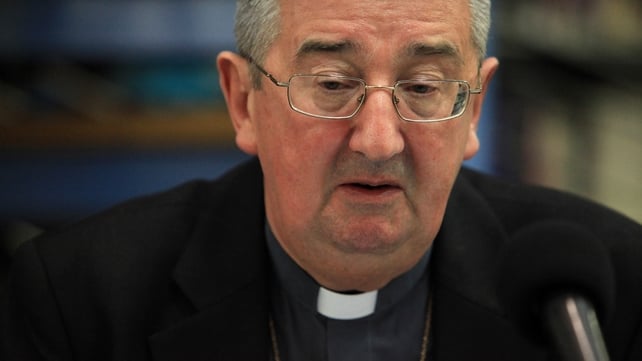
Catholic Archbishop Condemns Homophobia, Supports Civil Unions
Saturday, 18 May 2013
Gay couples in Portugal win limited adoption rights |
Portugal's parliament on Friday handed same-sex couples the right to adopt the children or foster children of one partner, a partial victory for equality campaigners that fell short of their call for full adoption rights.
Reuters:
Friday, 10 August 2012
August 10: Andrew Sullivan
"The most successful marriages, gay or straight, even if they begin in romantic love, often become friendships. It's the ones that become the friendships that last."
Selected works by Andrew Sullivan:
Wednesday, 21 March 2012
Should Two Left-handed People Be Permitted to Marry?
| left and right handed scissors |
Think of it this way. There is a distinction between left-handedness and the act of writing left-handedly. For most of us the distinction remains exactly that, and has no moral consequences. We would understand that a left-handed person forced to write right-handedly owing, say, to having their left arm in a plaster cast, or a right-handed person forced to write left-handedly for analogous reasons, would, with some difficulty, be able to learn to do so. These people would in some sense be acting “contra natura”. But the use of the hand appropriate to their handedness would be entirely unremarkable, and if we used words to describe it at all, they would be words like “typical” or “natural”. Now, imagine that, involved in a Catholic discussion, you find yourself addressing a left-handed person. You say: “Any left-handed writing you do is intrinsically wrong; and in fact the inclination we call left-handedness must be considered objectively disordered.” The only justification for using the distinctions in this way is if you have received, from quite other sources, the sure knowledge that right-handedness is normative to the human condition, anything else being some sort of defect from that norm, and yet you don’t want entirely to condemn the person who has a more or less strong tendency to left-handed writing.
Sunday, 12 February 2012
NH Voters Oppose Gay Marriage Repeal
<p style="text-align: justify;">When the Republicans made major electoral gains in November 2010, regaining control of the State legilature, they were quick to announce their plans to repeal the legislation for <a class="zem_slink" title="Same-sex marriage" href="http://en.wikipedia.org/wiki/Same-sex_marriage" rel="wikipedia">marriage equality</a>. Since then, there have been a series of delays. First, there came the announcement that although repeal was important, it would not take place in 2o11, but would wait until 2o12. Late last year, it was said that repeal would take place early in 2012 - then that was pushed back until "after the GOP primary". The primary came and went - and the candidates most visibly opposed to equality were bottom of the poll. Then, it was said that repeal would take place some time in February. It has still not been sheduled.</p>
<p style="text-align: justify;">A report on fresh opinion polling illustrates precisely why the political leadership is getting cold feet - repeal is a clear vote loser.</p>
<blockquote>
<p style="text-align: justify;"><span style="color: #000080;"><em>The University of New Hampshire Survey Center on Feb. 7 polled Granite Staters on same-sex marriage, as it has several times since 2009. This time, citizens were asked if they support or oppose repeal of the law. Results indicate 59 percent oppose and 32 percent favor repeal.</em></span></p>
<p style="text-align: justify;"><span style="color: #000080;"><em>"It's been the same each time we ask — about 2-1 in favor of same-sex marriage," said survey center director Andy Smith. "It's not an issue most people care about one way or the other. Proponents are very much in favor, opponents are very much opposed. But for most people, it's a shrug."</em></span></p>
<p style="text-align: justify;"><span style="color: #000080;"><em>Smith said the polling numbers are so strong that, Republican majority or not, he predicts the repeal bill will not ultimately pass the N.H. House and Senate.</em></span></p>
<p style="text-align: justify;"><span style="color: #000080;"><em>"I don't see there's going to be a real strong push to pull this through," he said. Legislators "can push against public opinion somewhat, but if you have your eye on November, you don't want to jeopardize your own seat and you don't want to jeopardize party control."</em></span></p>
<p style="text-align: right;"><em>via <a href="http://www.seacoastonline.com/articles/20120212-NEWS-202120332">SeacoastOnline.com</a>.</em></p>
</blockquote>
<p style="text-align: justify;">For Catholics, the religious dimension is of particular interest.</p>
<blockquote>
<p style="text-align: justify;"><em style="color: #000080;">"It's a time of change and the momentum is with gay marriage," said Michele Dillon, chair of the sociology department at UNH, who specializes in sociology and religion.</em></p>
<p style="text-align: justify;"><em style="color: #000080;">Poll after poll shows what Cox calls the "millennials" — those age 18 to 29 — overwhelmingly favoring same-sex marriage. "The younger generation is perplexed that it's even an issue," Dillon said. "They're just totally ahead on that."</em></p>
<p style="text-align: justify;"><span style="color: #000080;"><em>The UNH poll indicates 71 percent of those age 18 to 34 "strongly oppose" repeal of New Hampshire's gay marriage law with another 14 percent somewhat opposing repeal.</em></span></p>
<p style="text-align: justify;"><span style="color: #000080;"><em>In a PRRI poll taken last June, 62 percent of millennials favor gay marriage, including 49 percent who identified themselves as Republicans.</em></span></p>
<p style="text-align: justify;"><span style="color: #000080;"><em>Dillon, who studies issues like gay marriage through the lens of both sociology and religion, said gay marriage is the new contraception issue for many Catholics, in particular. <strong>"Years ago, committed Catholics said 'We can be good Catholics without adhering to the Catholic teachings on contraception,'" she said. "Now it's happening with gay marriage. Most Catholics disagree with some aspect of church teaching."</strong></em></span></p>
</blockquote>
<p style="text-align: justify;">Today, Feb. 12, is World Marriage Day. Expect the bishops and other conservative sources to interpret this in terms exclusively related to what they erroneously think of as "traditional" marriage. Marriage, however, has undergone many transformations in Western history, and as I showed in discussing Pope Benedict's praise of marriage to Italian politicians, the social benefits of marriage apply to all marriages - not only those approved by Catholic bishops.</p>
<p style="text-align: justify;">We too, can celebrate World Marriage Day.</p>
<div class="zemanta-pixie" style="margin-top: 10px; height: 15px;"><a class="zemanta-pixie-a" title="Enhanced by Zemanta" href="http://www.zemanta.com/"><img class="zemanta-pixie-img" style="border: none; float: right;" src="http://img.zemanta.com/zemified_c.png?x-id=c06951f9-3902-4ceb-91cc-a2b8793c7585" alt="Enhanced by Zemanta" /></a></div>
Wednesday, 8 February 2012
Religion and Gay Marriage: Reactions to Prop 8 Ruling.
<p style="text-align: justify;">Catholic bishops have been quick to react to yesterday's court ruling that California's Proposition 8 ballot was unconstitutional, speaking of their disappointment at what they see as the "injustice" of the ruling (an ironic choice of words, as it is the business of the courts above all, to deliberate and rule on matters of justice. The learned judges in this case, confirming earlier decisions by lower courts, have found that the "injustice" lay in creating two classes of persons, one with lesser rights than the other). Frances De Bernardo at New Ways / Bondings 2.0, recalling the active role that the bishops played in perpetrating the original injustice, reflects on the harm that has done to the Catholic Church in California, and draws an important lesson from it: the urgent need, going forward, to move from a political stance on the matter to a pastoral one:</p>
<blockquote>
<p style="text-align: justify;"><span style="color: #000080;"><em>Though this case temporarily provides a victory for the marriage equality movement in California, there is still work of reconciliation work to be done in the Catholic Church there. In a <a title="‘Catholic Church Doesn’t Need to Take Another Battering’" href="http://newwaysministryblog.wordpress.com/2012/01/27/catholic-church-doesnt-need-to-take-another-battering/" target="_blank"><span style="color: #000080;">post two weeks ago</span></a>, I mentioned that a California friend told me that the hierarchy’s heavily funded campaign to pass Proposition 8 has had a harmful effect on the pastoral life of LGBT Catholics and their allies in California. Many have become alienated from the church and left it because of the vociferous anti-gay nature of the campaign and its rhetoric. While the hierarchy has been focused on the political nature of the marriage debate, it’s time that they started to look at the pastoral component of it, too, and begin the much needed work of reconciliation–for the good of the entire church.</em></span></p>
<p style="text-align: right;"><a href="http://newwaysministryblog.wordpress.com/2012/02/08/the-catholic-factor-of-proposition-8/">Francis DeBernardo, Bondings 2.0</a></p>
</blockquote>
<p style="text-align: justify;">Other denominations that were active in the Prop 8 campaign against marriage, have expressed similar and predictable disappointment. I am more interested though, in the mounting evidence of an opposite, supportive view from faith leaders.<!--more--></p>
<h4 style="text-align: justify;">Religious support <em>in favour</em> of justice and equality in marriage.</h4>
Last week, an English bishop declared his support for gay marriage in the UK. In Washington DC, an Episcopal bishop has declared similar support for marriage equality in Maryland.
<blockquote>
<p style="text-align: justify;"><span style="color: #000080;"><em>The new Episcopal Bishop of the Diocese of Washington, D.C., on Tuesday endorsed the legislative campaign now underway to legalize same sex marriage in Maryland.</em></span></p>
<p style="text-align: justify;"><span style="color: #000080;"><em>The Rt. Rev. Mariann Edgar Budde, wrote on the Washington Post website that gay marriage opponents should not be so certain the Bible is on their side. In her reading the Bible</em></span></p>
<blockquote>
<p style="text-align: justify;"><span style="color: #000080;"><em>... condemns exploitative sexual activity that is the antithesis of loving, committed relationships. The Bible is silent on the subject of same-gender monogamous relationships.</em></span></p>
</blockquote>
</blockquote>
In Pasadena, Rev Susan Boyle called the ruling a "victory", reversing the Catholic bishops' argument from religious freedom:
<blockquote>
<p style="text-align: justify;"><span style="color: #000080;"><em>The Rev. Susan Russell of All Saints Pasadena, where they have refused to sign marriage licenses for any couple until gay couples could be legally wed, went straight to rejoicing.</em></span></p>
<p style="text-align: justify;"><span style="color: #000080;"><em>Russell, an Episcopal priest, called it a victory for</em></span></p>
<blockquote>
<p style="text-align: justify;"><span style="color: #000080;"><em>...all Americans who believe that the "liberty and justice for all" in the pledge we teach our children really means ALL. It is also a victory over those who erroneously believe that the freedom of religion guaranteed by the First Amendment gives them freedom to write their theology on marriage -- or anything else -- into our Constitution.</em></span></p>
</blockquote>
<p style="text-align: justify;"><span style="color: #000080;"><em>Russell dismisses the notion this tramples on freedom of religion, saying in a statement that everyone is</em></span></p>
<blockquote>
<p style="text-align: justify;"><span style="color: #000080;"><em>... just as free today to decide for themselves whether God equally blesses our marriages. What the 9th Circuit Court said today is that they are NOT free to decide whether the Constitution equally protects them.</em></span></p>
</blockquote>
</blockquote>
<h6 class="zemanta-related-title" style="font-size: 1em;">Related articles</h6>
<ul class="zemanta-article-ul">
<li class="zemanta-article-ul-li"><a href="http://enlightenedcatholicism-colkoch.blogspot.com/2012/02/prop-8-to-supremes-plus-some.html">Prop 8 To The Supremes Plus Some Interesting Poll Data</a><em> (Enlightened Catholicism)</em></li>
<li class="zemanta-article-ul-li"><a href="http://www.mlp.org/article.php/Proposition8RuledUnconstitutional">Marriage Equality Victory: Proposition 8 Unconstitutional</a> <em>(More Light Presbyterians)</em></li>
<li class="zemanta-article-ul-li"><a href="http://latimesblogs.latimes.com/lanow/2012/02/prop-8-gay-marriage-san-diego-mayor.html">Prop. 8: San Diego mayor, once a gay-marriage foe, cheers ruling</a> (latimesblogs.latimes.com)</li>
</ul>
<div class="zemanta-pixie" style="margin-top: 10px; height: 15px;"><a class="zemanta-pixie-a" title="Enhanced by Zemanta" href="http://www.zemanta.com/"><img class="zemanta-pixie-img" style="border: none; float: right;" src="http://img.zemanta.com/zemified_c.png?x-id=9e0f77c5-1fe3-4c94-a4f7-57863d188843" alt="Enhanced by Zemanta" /></a></div>
Wednesday, 1 February 2012
Religious Divides in Support for Same-Sex Marriage
It is often assumed, quite incorrectly, that the disputes over marriage equality are between those standing up for religious belief (especially Christian belief), and secularists on the side of human rights. The fallacy of this assumption is neatly illustrated by this graphic, in a post at the Public Religion Research Institute, drawing on a comprehensive analysis of data from the Pew Research Institute. This clearly shows that the disagreement is not between religion and human rights, but between the different shades of religious affiliation. Two of the three groups with the strongest support for equality are from religious groups - but not Christian religion (Jews, and other non-Christian faith groups).
Even within the Christian faith, there is clear division between denominations. White and Hispanic Catholics, and White Mainline Protestants, all show clear majority support for equality. (The research does not break out Black Catholics):
- White Catholics: 56% in favour, 39% opposed
- Hispanic Catholics: 53% in favour, 37% opposed
- White Mainline Protestants: 52% in favour, 40% opposed
The arguments from "religious freedom" against legal recognition for all marriages must surely also take into account the freedom of those people of faith that support same - sex marriage, both in other faith groups, and within their own denominations. (In
Of the groups broken out for analysis, only Black Protestants, Mormons and Evangelicals are opposed - but, it must be said, very strongly.
Beyond Secular vs. Religious: Religious Divides in Support for Same-Sex Marriage
In 2011, majorities of most religious groups favored allowing gay and lesbian couple to marry legally, illustrating that the old narrative of battle lines between secular supporters and religious opponents no longer serves as an accurate characterization of the landscape of the same-sex marriage debate. In the general population, 2011 was also the first year on record in which supporting same-sex marriage was not a minority position. In May, several surveys (all asking slightly different versions of the same question) found that a majority of the public supported allowing gay and lesbian couples to legally marry. PRRI’s May survey found that 51% of Americans were in favor, and 43% were opposed.
-full analysis at Public Religion Research Institute.
This strength of feeling from the opponents, and the rather milder feelings of supporters, must be assessed together with the evidence from several sources that opposition is dropping in degree, as well as in extent, while supporters are growing in both numbers and intensity of feeling.
The striking contrast between the views of younger people, including younger Evangelicals, and their older co-religionists shows clearly that this shift within the churches towards more widespread, and more intense, support for marriage equality will surely continue to grow:
There are large generational differences between Millennials (age 18-29) and older Americans on the issue of same-sex marriage. Sixty-four percent of Millennials favor allowing gay and lesbian couples to marry, a rate that is more than 20 points higher than among those ages 30 and above (42%). This generational gap persists within every religious group, including more conservative religious groups. For example, 66% of Catholic Millennials favor allowing gay and lesbian couples to marry, 15 points higher than Catholics ages 30 and above (51%). Even among white evangelical Protestants—the group most opposed to same-sex marriage—nearly 4-in-10 (39%) white evangelical Protestant Millennials favor allowing gay and lesbian couples to marry legally, a rate that is more than 20 points higher than that of white evangelicals ages 30 and older (18%).
Related articles
- Catholic vs. Catholic on Marriage Equality in Maryland (New Ways Ministry blog)
- Faith Initiative Launches to a Full House (PrideSource, Michigan)
Monday, 23 January 2012
"Alfredo's Fire": The Self- Martyrdom of Alfredo Ormando
Friday, 26 August 2011
Aquinas, "Nature" - and Sex.
Thomas Aquinas, who followed a century after Hildegard, wrote commentaries on 10 works by the greatest scientist of his day, Aristotle, even though the pope had forbidden Christians to study Aristotle. So controversial was Aquinas in his day that the king of France had to call out his troops to surround the convent where Aquinas lived to protect him from Christians aroused by fundamentalist clergy. For Aquinas, “revelation comes in two books—the Bible and Nature” and “a mistake about nature results in a mistake about God.” Aquinas insisted that one is always responsible to one’s conscience, more than to any other authority (emphasis added).
Monday, 20 September 2010
Giovanni Bosco
In 1864 he founded the Salesian Fathers religious order. At Bosco's death the Salesian "oratoires" numbered about 250. He was beatified in 1924, and declared a Saint of the Catholic church in 1934.
Bosco is one of the many homosexuals who found in the Catholic church a family and a "mission". Quite surely he was a paedophile who, possibly, succeeded in sublimating his attraction to young boys into a socially useful undertaking.
(From Aldrich & Wetherspoon, "Who's Who in Gay and Lesbian History from Antiquity to WWII"
Related articles by Zemanta
- Cardinal Borghese (1576 - 1633), Homoerotc Art Lover (queerhistory.blogspot.com)
Saturday, 18 September 2010
What Irish Catholics Believe
Two-thirds support gay marriage, poll finds
Also:JUST OVER two-thirds of people (67 per cent) believe gay couples should be allowed to marry, according to an Irish Times /Behaviour Attitudes social poll.It is one of a series of findings in a poll on “sex, sin and society” that indicates Irish people have adopted a more liberal attitude towards personal relationships and sexual behaviour.In addition showing strong support for gay marriage, a significant majority (60 per cent) also believe civil partnerships for gay couples will not undermine the institution of marriage. A large majority (91 per cent) also say they would not think less of a person if they revealed they were gay or lesbian.These numbers are consistently high across most age groups, as well as in urban and rural areas.People are divided, however, on whether gay couples should be allowed to adopt children. Some 46 per cent support such a move, while more than a third (38 per cent) are opposed. Younger people, urban dwellers and women are more likely to be supportive of the idea.The findings also indicate there is a growing consensus that living together before marriage is likely to result in a more stable marriage. A majority (57 per cent) believe cohabitation is a positive development. This view is reflected consistently across most age groups.Even higher numbers (79 per cent) do not regard sex before marriage as immoral. When broken down by religion, most Catholics – again, 79 per cent – did not see anything wrong with the practice.Just 15 per cent, mostly older people or those living in rural areas, see it as immoral.There are also significant differences across the generations in attitudes towards issues such as celibacy and virginity. In total, just under half (48 per cent) of people admire those who choose to be celibate for moral or religious reasons.A majority of older people (62 per cent) aged 65 or more are much more likely to admire celibacy, while this falls to well under half among younger and middle-aged people.Even among Catholics, respondents are just as divided. While 51 per cent of Catholics admire celibacy, the remainder either do not (33 per cent), or say they do not know (16 per cent).Not all the poll findings point to increasingly liberal attitudes, however. The average age most people feel teenagers should begin to have sex at is 18 years, above the current age of consent which is 17.
Survey reveals more relaxed attitude to sex
Two-thirds support gay marriage, poll finds
Related articles by Zemanta
- LGBT Inclusion in Church: A Study in Contrasts (queertheology.blogspot.com)
- The Brits Debate Celibacy (enlightenedcatholicism-colkoch.blogspot.com)
- Minnesota Catholics For, Against Gay Marriage (rooting-for-gay-marriage.blogspot.com)
Wednesday, 21 July 2010
Irish Civil Partnership Bill Signed.
Signing into law of new civil Bill welcomed
THE SIGNING into law yesterday of the Civil Partnership Bill was welcomed across the political spectrum and also by groups that have campaigned for legal recognition for same-sex couples in Ireland.
The Bill was signed into law by President Mary McAleese at Áras an Uachtaráin yesterday morning.
Minister for Justice Dermot Ahern said it was “one of the most important pieces of civil rights legislation to be enacted since independence”.
The Green Party’s justice spokesman Trevor Sargent also warmly welcomed the development, describing it as a significant step forward and a stepping stone towards greater equality in society.
While the Bill has now been enacted, it cannot fully commence until commensurate changes take place in social welfare, tax and pensions legislation.
Those changes are likely to be made in the Finance Bill and Social Welfare Bill drafted following December’s budget.
The changes will pave the way for the first civil partnership registrations to take place in January next year.