Showing posts with label Same-sex marriage. Show all posts

Wednesday, 12 February 2014

Red State Marriage Equality Train Rolls Along

As marriage equality notched up one victory after another in 2012 and 2013, opponents bleated a repetitive refrain: those were all in liberal, blue states. Gay activists had reached their limit. In red states, traditional marriage would continue to prevail.
Not so.
idaho-rainbow-270x400
Even in Idaho, progress in a court ruling (see below)
Over the year end, in quick succession two red state judges (first Utah, then Oklahoma) ruled that state bans on same - sex marriage were in conflict with the US constitution, and so struck down those bans. Since then, both rulings have had stays placed on their execution, but meanwhile, there've been a series of further notable decisions in other red and purple states, some in just the past week. Individually, each of these is less dramatic than the Utah and Oklahoma decisions, but collectively they are impressive, and reinforce the impression that the writing is now on the wall for gay marriage bans, even in red states.
In just the past week,
In Kentucky, a judge ruled today that the portion of the state ban that prohibits recognition of out of state same - sex marriages.
Also today, a hearing was held in a Texan court in one of several legal challenges to the state ban on gay marriage.
In Idaho, a judge ruled yesterday that the state ban on gay marriage cannot be used to exclude a same - sex partner from adopting a spouse's child.
In Nevada, an obscure ruling against discrimination in jury selection, led to the Republican governor, and also the Democratic Attorney General, declining to defend in court the state's ban on gay marriage.
Fresh legal challenges to state bans were announced in Lousiana, and Missouri.
As at 12/02/2014,in addition to suits challenging things like survivor benefits and parental /adoption issues, direct challenges to gay marriage bans have been already been filed in the following 21 US states. I  the light of today's partial ruling, expect Kentucky to join this list soon - and Mississippi, where several couples have applied for marriage licences, in expectation of being denied, which would prepare the way for a full legal challenge. Is there anywhere in the US of A, where state bans on marriage equality are not under threat?
  1. Arkansas
  2. Arizona
  3. Colorado
  4. Florida
  5. Idaho
  6. Kentucky
  7. Louisiana
  8. Michigan
  9. Missouri
  10. Montana
  11. Nebraska
  12. Nevada
  13. North Carolina
  14. Ohio
  15. Oregon
  16. Pennsylvania
  17. South Carolina
  18. Tennessee
  19. Texas
  20. Virginia
  21. Wisconsin
(More details for these at Marriage Equality USA) Even in the churches, including the Catholic Church, there's progress - but that's another story.
Enhanced by Zemanta

Tuesday, 11 February 2014

ACLU plans to sue state over gay marriage | Springfield News-Leader | news-leader.com

Stephanie Perkins Deputy director for PROMO, a gay and lesbian advocacy group


The ACLU, on behalf of gay couples throughout Missouri, plans to sue this week for recognition of same-sex marriage.

 Stephanie Perkins, deputy director for PROMO, a Missouri gay and lesbian advocacy group, said the litigation seeks to overturn Missouri’s ban on same-sex marriage.

 Couples from Kansas City, St. Louis, mid-Missouri and Springfield are included in the suit, which will be filed in state court in Kansas City.

 Charles Abernathy, spokesman for the GLO Center in Springfield, said a news conference involving the ACLU litigation has been scheduled at the GLO Center for Wednesday.

 Abernathy said that while GLO will be the venue, PROMO is taking the lead on the event.

 The litigation comes less than a month after a federal judge struck down Oklahoma’s ban on same-sex marriage.

The ban is similar to Missouri’s prohibition on same-sex marriage. Missouri voters approved the ban in 2004 — 71 percent to 29 percent — the same year Oklahoma approved its ban. The bans in both states are amendments to the state constitutions.


Enhanced by Zemanta

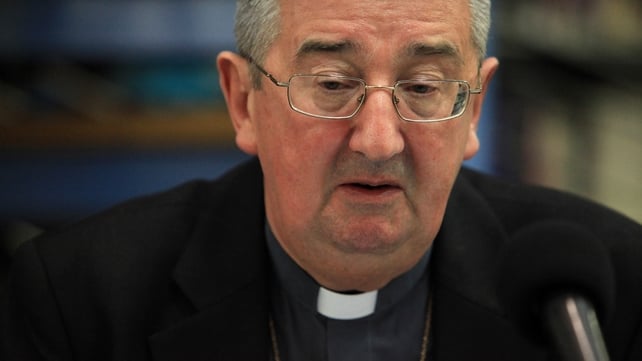
Catholic Archbishop Condemns Homophobia, Supports Civil Unions

Dr Diarmuid Martin told RTE that the Church had to be very careful that this was not done in the forthcoming debate on the same-sex referendum in the Republic.
Archbishop Martin said he felt that the debate had already got off to a bad start.
Discussions have to be carried out in a "mature" way so that people can freely express their views, while at the same time being respectful and not causing offence, he said.
He said Church teaching was that marriage was between a man and a woman, exclusively, but that this approach did not exclude gay people from celebrating their union by a different means.


Responding to Dr Martin's comments, the Gay and Lesbian Equality Network said they are disappointed by the comments made by the Archbishop of Dublin regarding same sex marriage and homophobia.

GLEN’s Brian Sheehan described it as “a missed opportunity” to tackle the role of the church and church teachings in creating what it said were “some of the difficult realities for lesbian and gay people in Ireland today”.

However, he welcomed Dr Martin’s acknowledgement of the impact that a culture, which still has homophobia as part of it, has on those who are lesbian, gay, bisexual and transgender.

Meanwhile, Taoiseach Enda Kenny called for a rational, calm and considered debate ahead of a referendum on same sex marriage next year.

Also speaking on RTÉ's This week, Mr Kenny said he never considered legislating for same-sex marriage and that it was instead an issue for a referendum.

He also promised to partake in the discussion in the lead-up to the referendum.

Mr Kenny said the Government deemed it important for people to have a debate before they vote in the impending referendum.

“We believe that it's important the people have a rational, common-sense. calm, considered and compassionate debate about this and I hope that happens.

“Next year people will make their decisions. I didn't consider legislating for this, it is a question for a referendum and it will be held next year,” said Mr Kenny.

Enhanced by Zemanta

Couples Sue to Force Ohio's Hand on Gay Marriage

 Four legally married gay couples filed a federal civil rights lawsuit Monday seeking a court order to force Ohio to recognize same-sex marriages on birth certificates despite a statewide ban, echoing arguments in a similar successful lawsuit concerning death certificates. The couples filed the suit in federal court in Cincinnati, arguing that the state's practice of listing only one partner in a gay marriage as a parent on birth certificates violates the U.S. Constitution. 


"We want to be afforded the same benefits and rights as every other citizen of the United States," said one of the plaintiffs, Joe Vitale, 45, who lives in Manhattan with his husband and their adopted 10-month-old son, who was born in Ohio. The pair married in 2011 shortly after New York legalized gay marriage. Rob Nichols, a spokesman for Republican Gov. John Kasich, said his office doesn't comment on pending litigation, "except to say that the governor believes marriage is between a man and a woman." The other plaintiffs in Monday's lawsuit are three lesbian couples living in the Cincinnati area who married in states that have legalized gay marriage. One woman in each of those marriages is pregnant through artificial insemination, and their babies all are due to be born this summer in Cincinnati hospitals. The couples say they're worried that having only one of them listed as a parent on their children's birth certificates could lead to problems down the road, such as a denial of parental rights to the one not named should their partner die or experience a medical emergency. "I have no legal grounds to stand on. That's not something that should be happening in our society," said Pam Yorksmith, who married her wife in California in 2008. The couple has a 3-year-old son and another on the way. The couples' attorney is the same one who represented two gay married couples in their lawsuit last year that successfully sought a court order forcing Ohio to recognize same-sex marriages on death certificates. The state is appealing the ruling, issued in December by federal Judge Timothy Black. "At both ends of our lifespans, a marriage is a marriage. A family is a family," said the couples' lawyer, Cincinnati civil rights attorney Al Gerhardstein. "A family is a loving, nurturing group of people and the identification document when the children come along is the birth certificate, and it ought to be right."

Enhanced by Zemanta

Friday, 22 March 2013

Colorado Governor John Hickenlooper signs civil unions bill into law

Joins eight other states that have civil unions or similar laws

Colorado Governor John Hickenlooper today signed into law a measure that legalizes same-sex civil unions in his state.


The new law provides gay and lesbian couples with such legal protections and responsibilities as the ability to take family leave to care for a partner, to make medical and end-of-life decisions for a partner, to live together in a nursing home, and to adopt children together.
During his annual State of the State address in January, Hickenlooper challenged the state legislature to move forward by saying: 'This year, let's do it. Let's pass civil unions!'
He had also publicly supported civil unions during his address a year earlier.
The law takes effect May 1.
It was just seven years ago that the state voted to constitutionally ban same-sex marriage. It will join eight states that have civil unions or similar laws. Nine states and the District of Columbia allow gay marriage.
Among those present at the signing was Colorado House Speaker Mark Ferrandino, a gay Denver Democrat who backed the bill.
'With the Governor’s signature here today, the protection of Colorado’s laws will now extend equally to all,' Ferrandino said in a statement. Thousands of Colorado families will now be able to receive the recognition they deserve.'
He added: 'Ladies and gentlemen, the Colorado sun now warms all our people.
Enhanced by Zemanta

Saturday, 16 March 2013

Charles Murray Urges the G.O.P. to Accept Gay Marriage : The New Yorker


Political scientist Charles Murray has never backed away from controversy, but usually his opponents have been liberals. Friday, however, he managed to upset conservatives at the annual conference known as CPAC, where thousands of bewildered Republicans gathered to figure out the way forward after their party’s 2012 electoral defeat. Murray ditched his prepared remarks on “America Coming Apart” in favor of an impromptu admonition to fellow conservatives to accept the legalization of both gay marriage and abortion.


Murray, who is currently a fellow at the American Enterprise Institute, is revered by many conservatives. (He considers himself a libertarian.) His 1984 book “Losing Ground,” which blamed social programs for worsening poverty, and his 1994 book, “The Bell Curve,” which ascribed lower I.Q. scores to some minorities, have been attacked by liberals but embraced as game-changers by many conservatives.

As he got warmed up, Murray explained that, while driving for more than an hour that morning to the conference, he had begun talking out loud to himself, which is how he usually practices his speeches. Upon realizing that he had more than an hour’s worth of fresh thoughts, he decided to simply drop the planned ones. The question on his mind was “How can conservatives make their case after the election?,” and the answer he wanted to share was drawn from his experience with his own four children. They range in age, he said, from twenty-three to forty-three. While they share many of his views on limiting the size of government, and supporting free enterprise, he said, “Not one of them thought of voting for a Republican President” in the last election. Their disenchantment with the Republican Party was not specifically because of Mitt Romney, he added, but because, “They consider the Party to be run by anti-abortion, anti-gay, religious nuts.”
“With gay marriage,” he went on, “I think the train has left the station.”

Certainly the locomotive power of the issue seemed hard to miss on a day when the top political news was Ohio Republican Senator Rob Portman’s announcement that he, too, supports gay marriage. (Richard Socarides has more on that.) While Portman’s position shifted because of his family situation—he explained publicly for the first time that his son had come out as gay—Murray said his own views had been influenced heavily by friends. “I was dead-set against gay marriage when it was first broached,” Murray said; as a fan of Edmund Burke, he regarded marriage as an ancient and indispensable cultural institution that “we shouldn’t mess with.” He used to agree with his friend Irving Kristol, the late father of neo-conservatism, that gay people wouldn’t like marriage. “ ‘Let them have it,’ ” he recounted Kristol as saying, with a chuckle. “ ‘They wont like it.’ ” Murray said that he himself used to think that “All they want is the wedding, and the party, and the honeymoon—but not this long thing we call marriage.”

But since then, Murray said, “we have acquired a number of gay and lesbian friends,” and to what he jokingly called his “dismay” as a “confident” social scientist, he learned he’d been wrong. He’d been especially influenced by the pro-gay-marriage arguments made by Jonathan Rausch, an openly gay writer for the National Journal and the Atlantic. Further, Murray said, he had discovered that the gay couples he knew with children were not just responsible parents; they were “excruciatingly responsible parents.”


Read more: The New Yorker

Enhanced by Zemanta

Tuesday, 12 March 2013

Gay Marriage Passes Minnesota Senate Committee

A bill that would authorize same-sex couples to legally marry in Minnesota has cleared a Senate committee and now awaits a vote on the floor, likely later this legislative session.

Senate hearing
Rep. Karen Clark, DFL-Minneapolis, introduces her bill allowing same-sex marriage to a packed hearing room during a meeting of the House Civil Law committee at the State Office Building in St. Paul on Tuesday, March 12, 2013. (Pioneer Press: Ben Garvin)
 
A House committee vote on whether to move the bill to the House floor is expected Tuesday evening, March 12.
The Senate Judiciary committee voted 5-3 in favor of the bill Tuesday afternoon, after about three hours of public testimony and members' comments.
All the 'yes' votes were from Democrats and all the 'no' votes from Republicans.
The Democrats control both the House and Senate, and Democratic Gov. Mark Dayton has said he'll sign a gay-marriage bill if one reaches his desk. Nine states and the District of Columbia currently allow gay marriage.
Tuesday morning, the House Civil Law committee heard an hour and a half of testimony on the House version of the bill and then broke to reconvene at 6 p.m.
"Committed same-sex couples should be treated fairly under the law," said Rep. Karen Clark, the sponsor of the House bill. "I believe it's time for us to do the right thing."
The bill would allow religious organizations to refuse to marry same-sex couples, and it would not affect the way they carry out adoptions, foster care placements or other social services unless they receive public money for those purposes.
But Gus Booth, pastor of Warroad Community Church, said he believes the religious exemptions offer limited protection. "Should a person's belief be confined
to the four walls of their church?" he said. He said the bill represents "overreaching" on the part of metro lawmakers to impose gay marriage on the rest of the state.
Both Clark and the bill's Senate sponsor, Scott Dibble, are gay Democrats from Minneapolis.
Eleven-year-old Grace Evans of Fridley told committee members that her mother and father have different, but complementary, strengths. "Which parent do I not need, my mom or my dad?" she asked.
Carlson Cos. Chairwoman Marilyn Carlson Nelson testified in support of the bill in part as a way to attract and retain talented workers. "We must fully live up to our Minnesota values," she said. Failing to recognize gay marriages amounts to "adult bullying," she said.


Enhanced by Zemanta

Wednesday, 27 February 2013

Illinois House committee advances gay marriage bill


The proposal, approved on a 6-5 vote in the House Executive Committee shortly before 10 p.m., is coming under increasingly heavy fire from church organizations who say same-sex marriage violates moral and religious principles. But advocates have ratcheted up calls for swift action.
Sponsoring Rep. Greg Harris, D-Chicago, said the bill is needed “because we need to treat all Illinois families equally under the law” but the status of people in civil unions is often misunderstood.
Under the measure, marriage in Illinois would be allowed between two people rather than only a man and a woman. Democratic Gov. Pat Quinn has vowed to sign the legislation, a move that would make Illinois the 10th state in the nation to allow same-sex marriage. The Senate passed the legislation with only one Republican vote on Valentine’s Day.
Advocates said the proposal would allow ministers to refuse to perform same-sex marriages if it’s against their beliefs and would not require church officials to make their buildings or parish halls available if they don’t wish it. But opponents have questioned if the protections are strong enough.
The House has held close votes on same-sex issues over the years. The latest movement to support gay marriage in Illinois has evolved quickly. It’s been less than two years since the first civil union certificates were issued for gay and straight couples.
But with the Democrats increasing their majorities in both the House and the Senate during last fall’s elections, the gay marriage issue gained traction. Advocates tried to pass the measure in the brief, lame-duck legislative session in January, but they called off the bid and refocused on passing the bill in the newly seated General Assembly.
-continue reaing at Chicago Tribune

Enhanced by Zemanta

Gay marriage bill unveiled in Minnesota

Governor Mark Dayton has indicated he will sign a marriage equality bill into law if it were to reach his desk
Minnesota Governor Mark Dayton has said he will sign a marriage equality law if it comes across his desk.
Marriage equality advocates are celebrating after Minnesota lawmakers have unveiled a new bill.
Sponsors of the same-sex marriage bill are aiming to repeal the outright 1997 ban prohibiting marriage for gay couples.
At a news conference today (27 February), co-author of the bill Scott Dibble spoke out in favor of marriage equality.
‘We are all human beings equal in the eyes of God,’ he said. ‘We’re affirming things that we all prize, love at the center of marriage.’
It is a bi-partisan bill, with Republican Senator Branden Peterson publicly supporting marriage equality in Minnesota

- See more at: Gay Star News 

Enhanced by Zemanta

Thursday, 21 February 2013

Approval expected but full House vote likely to be tough battle 21 FEBRUARY 2013 | BY GREG HERNANDEZ The next step in the path to Illinois becoming the 10th state in the US to make gay marriage legal will come next Tuesday (26 February) when it is to be considered by the House Executive Committee.


The committee is comprised of seven Democrats and four Republicans. At least six of the members must vote in favor of sending the Religious Freedom and Marriage Fairness Act to the full House for a vote. 

Since the Illinois State Senate passed the marriage equality bill by a vote of 34-21 last week, a full House vote would be the final step before Illinois Governor Pat Quinn can sign gay marriage into law. 

At least 60 House members must vote 'yes' to pass the legislation for it to move on to the governor.

Illinois already allows civil unions. It is believed legalizing marriage equality could generate the state anywhere from $39 to $72 million and up to $8 million in new tax revenues. 

But the marriage bill has seen strong criticism from religious and far right-wing groups.

Enhanced by Zemanta

Friday, 8 February 2013

Pennsylvania Voters support Gay Marriage

A slim majority of Pennsylvania voters supports legalizing gay marriage, an issue that will be argued before the U.S. Supreme Court next month.


Fifty-two percent support gay marriage, a Franklin & Marshall poll made public Thursday shows, up from 33 percent support measured by the college in a 2006 poll. The increased support mirrors a national trend and the results of a Morning Call/Muhlenberg College poll in December 2011.

Muhlenberg pollster Chris Borick has been watching views on gay marriage shift dramatically. Support rose from 35 percent in 2004, to 42 percent in 2009, to 52 percent in 2011. In polling terms, he said, that's "meteoric."

It's also largely generational. Of Pennsylvanians younger than 35, 79 percent support gay marriage, while those over 55 back gay marriage by 42 percent, said G. Terry Madonna, pollster for F&M in Lancaster.

» The latest on traffic, delays and road construction delivered to your mobile phone. Click to sign up to receive text alerts!

"I think in 25 years this is not going to be much of an issue," Madonna said.

The issue has seen significant turning points in just the last year. President Barack Obama voiced his support for gay marriage ahead of the 2012 election, the national Democrats added it to their party platform and the president's inaugural address last month was the first to include mention of gay rights.

At the end of March, the Supreme Court will hear arguments over the constitutionality of two laws, one federal and one from California, that define marriage as between one man and one woman. Nine states — Connecticut, Iowa, Maine, Maryland, Massachusetts, New Hampshire, New York, Vermont, and Washington — have legalized gay marriage.

Adrian Shanker of Bethlehem, president of Equality Pennsylvania, a nonprofit that advocates for gay equality, said Pennsylvanians and most Americans, particularly younger ones, are now viewing the gay marriage issue as a matter of civil rights.

"In six years, which is not that long in terms of public opinion on most issues, we've just seen a sea change," he said. "I think hearts and minds have been changing. ... Those who actively oppose it are shrinking every single day."

- continue reading at  F&M 

Enhanced by Zemanta

Monday, 17 December 2012

Thai government drafting same-sex civil partnership law


 The Thai government has formed a committee to draft legislation on civil-partnership law for same-sex couples.


One of the committee members, Anjana Suvarnananda of LGBT rights group Anjaree told Gay Star News that the committee has already met and the timetable for drafting recognition of same-sex partnerships is six weeks.

'It's just drafting,' said Suvarnananda. 'And then they will send it to a legal department who will iron it out and make it more legal language. And then it needs to get approval from the government. I'm not sure how long it will take.'

No country in Asia currently has comprehensive civil partnership law. So if this legal recognition is passed, Thailand will be the first.

Thailand has a reputation for tolerance for LGBT people but there is no anti-discrimination law (and widespread discrimination) and even though it is a Mecca for sex reassignment surgery, Thai transexuals cannot change the gender written on their official documents. �


Enhanced by Zemanta

Wednesday, 12 December 2012

New Poll: Three-quarters of public back back same-sex marriage


A new Ipsos-MORI poll for Freedom to Marry has found that three-quarters of voters support same-sex marriage.
The most popular choice – 45 per cent – was that gay people should be allowed to get married to each other but religious organisations should not be required to provide wedding ceremonies to gay people.
But a further 28 per cent of voters thought that gay people should be allowed to get married to each other and religious organisations should be required to provide wedding ceremonies to gay people.
gayweddingmuralstjohns
This means nearly three quarters of voters – 73 per cent – want to allow gay marriage while less than a quarter – 24 per cent – do not.
Only one in six voters – 17 per cent - thought that gay people should not be allowed to get married but should be allowed to form a civil partnership.
An even smaller minority – just 7 per cent – thought that gay people should not be allowed to get married to each other or form a civil partnership.
Nick Herbert MP commented:
“This survey shows that a large majority of people are in favour of equal marriage with most of those wanting to protect the freedom of religious organisations to decide whether to conduct such ceremonies.
“This is why the assurances given by the Government today about the proposed legislation are so important. When religious freedom is protected, only a minority of voters agree with the opponents of equal marriage that gay people should only be entitled to civil partnerships.”
About the Ipsos MORI poll:
Ipsos MORI interviewed a representative sample of 1,023 adults aged 18+ across Great Britain. Interviews were conducted by telephone 7th to 10th December 2012. Data are weighted to match the profile of the population.
Click here for the top lines from the poll
Click here for the poll data

Enhanced by Zemanta

Uruguay Lower House Approves Gay Marriage


Uruguay has moved closer to legalising gay marriage after the lower house of Congress approved a law making all marriages equal.


The measure, which was passed by a wide margin, now goes to the Senate where it is expected to be approved. After a long debate, Uruguayan deputies voted overwhelmingly on Tuesday night to approve the Marriage Equality Law.
"This is not a homosexual or gay marriage law. It is a measure to equalise the institution independent of the sex of the couple," said Julio Bango, one of the bill's authors.
The bill now goes to the Senate where President Jose Mujica's governing coalition has a majority.
In recent years, Uruguay has moved to allow same-sex civil unions, adoption by gay couples, and to allow gay members of the armed forces.

It would make Uruguay the second Latin American country after Argentina to allow gay marriages.
Uruguay's neighbour Argentina legalised gay marriage in 2010. Same-sex marriages have been legal in Mexico City since 2009. 
Same-sex marriages are legal in Mexico City, while civil unions are recognised in several countries in the region. In a recent decision Mexico's Supreme Court overturned a law in the state of Oaxaca that banned gay marriage. The ruling could pave the way to legalisation across Mexico, according to legal experts.


In May, Brazil's Supreme Court voted overwhelmingly in favour of allowing same-sex couples the same legal rights as married heterosexuals.
via BBC News

Enhanced by Zemanta